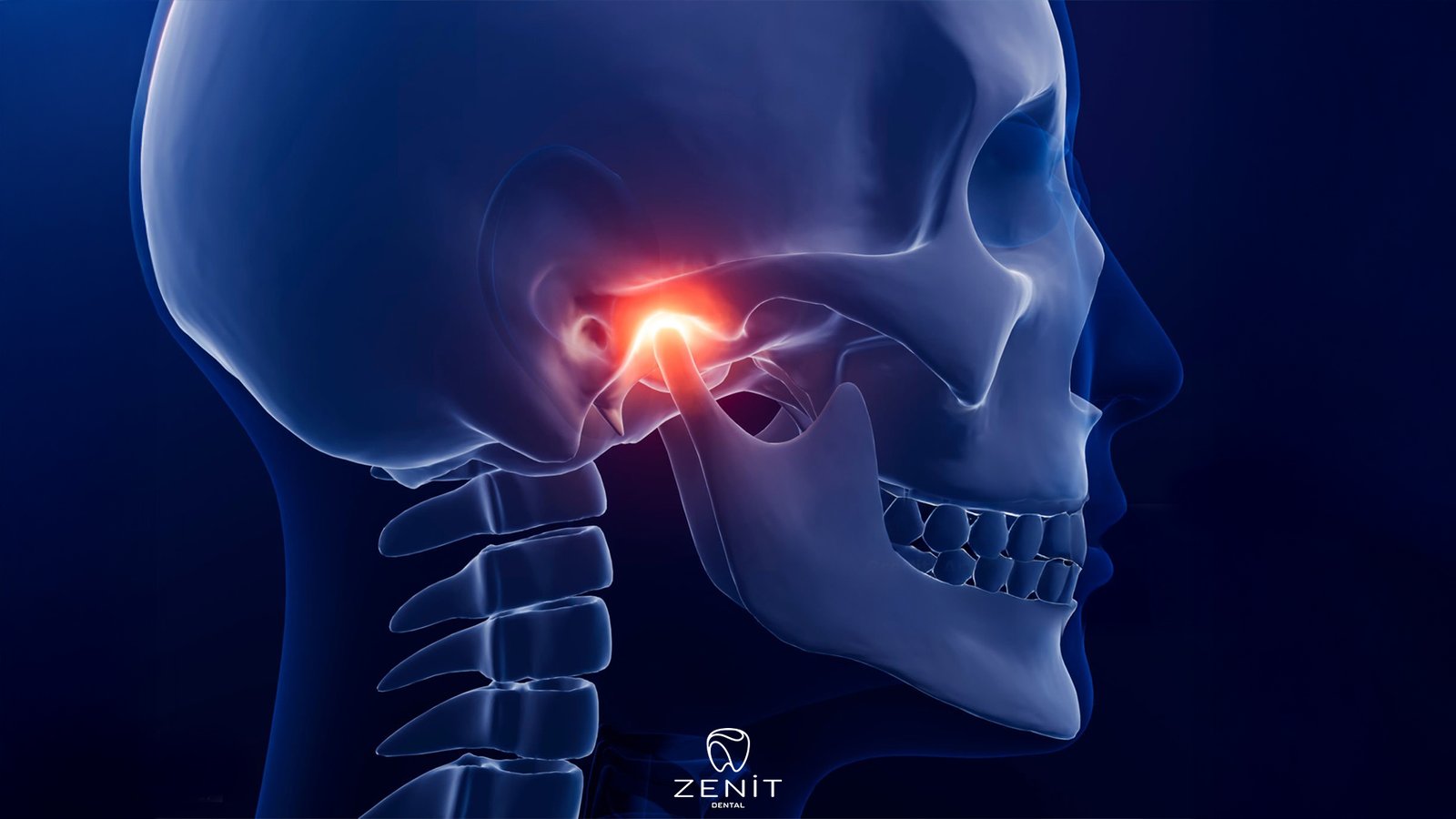
Just like other parts of the body, each structure in the face and mouth area is vitally important. This is because crucial functions such as speaking, swallowing, chewing, and breathing are performed here. The temporomandibular joint (TMJ), a part of this region, is the most mobile bone in the body and the only one of the facial bones that moves. Temporomandibular joint disorders, which are common today, arise in the soft and bony tissues of the joints and can lead to other problems over time. Therefore, for the complex nature of TMJ treatment, it is necessary to seek help from a specialist doctor.
[https://www.zenitdent.com/cene-eklemi-tedavisi-nedir/”>temporomandibular joint treatment
The temporomandibular joint (TMJ), also known as the jaw joint, is a hinge-like structure between the jawbone and the skull. This living, dynamic tissue plays a crucial role in the relationship between the upper and lower jawbones and in the closing system of the teeth. Located just in front of both ears, this joint allows the jaw to move to the right, left, down, and up. This enables yawning, speaking, and chewing movements.
The temporomandibular joint (TMJ) is controlled by the muscles surrounding and attaching to it. This joint is surrounded by the upper and lower jawbones and a cartilage disc. There are also structures with different functions, such as the relationships between fibers and muscles. The harmonious functioning of this complex TMJ is an indicator of good health. However, if this harmony is disrupted, TMJ disorder occurs. Therefore, TMJ treatment by a specialist is necessary.
This condition, which significantly reduces a person’s quality of life, mostly occurs in young and middle-aged individuals. Furthermore, TMJ disorder is a complex condition affecting systems in different areas. Problems involve a portion of the head and neck muscles, chewing muscles, the TMJ, salivary glands, lips, cheeks, teeth, and ligaments. This problem can also cause pain in the temples, under the chin, in the cheek muscles, in front of the ears, and around the eyes.
To prevent temporomandibular joint disorders, which affect a large part of the population, it is necessary to pay utmost attention to oral and dental health. Because this disease can occur for many different reasons. For example, it is often seen in people who have habits such as clenching their teeth during stress or grinding their teeth at night. In addition, there are some factors that predispose to temporomandibular joint disorders. These include:
Parafunctional habits such as chewing gum, excessive talking, nail biting, and pen chewing.
Congenital anatomical abnormalities.
Neurological, psychiatric, and psychological problems.
Posture and posture disorders.
Traumatic and prolonged dental procedures.
Systemic disorders and tumors affecting the head and neck region.
Trauma to the jaw area in situations such as sports and car accidents.
Missing teeth.
Faulty prosthetic procedures affecting jaw function.
Continuous unilateral chewing.
Teeth grinding and clenching.
All of these reasons mentioned above require examination by a specialist. Although some symptoms may be similar to other mild conditions, the possibility of jaw disease should still be considered. This ensures the necessary conditions for temporomandibular joint (TMJ) treatment are met.
The treatment process for the temporomandibular joint (TMJ), a dynamic living tissue, begins with a diagnosis by a specialist doctor. First, the specialist gathers information about the discomfort the person is experiencing and the symptoms they are exhibiting. The diagnostic process takes approximately 30-40 minutes. The frequency and times of day the patient experiences these complaints are inquired about. Then, a detailed physical examination of the teeth, TMJ, chewing muscles, and the closing system of the teeth is performed.
During the examination, the physician places their fingers on the triangular area located just in front of the patient’s two ears. Then, they ask the patient to open and close their mouth. Diagnosis is made based on the opening range, tension, or sounds produced during this process. Following the physical examination, an X-ray of the jaw is taken. These tests determine the underlying cause of the temporomandibular joint disorder, leading to a diagnosis. However, in some cases, these procedures may not fully diagnose the condition. If deemed necessary, an MRI scan is used to aid in a more accurate diagnosis.
Different temporomandibular joint (TMJ) treatment techniques are applied depending on the underlying cause and severity of the condition. The main goal of TMJ treatment is to restore the patient’s normal and healthy jaw function. Cooperation between the doctor and the patient is crucial throughout the treatment process, as the effectiveness of the treatment can only be determined by the patient’s observation of a reduction in their symptoms.
The type and duration of treatment are determined according to the degree of the condition and the severity of the symptoms. However, these symptoms, which develop in many people, are temporary and generally do not cause more serious problems. Treatment eliminates the causative factor, thus reducing and spontaneously eliminating the symptoms. However, no single treatment method is effective in curing the condition.