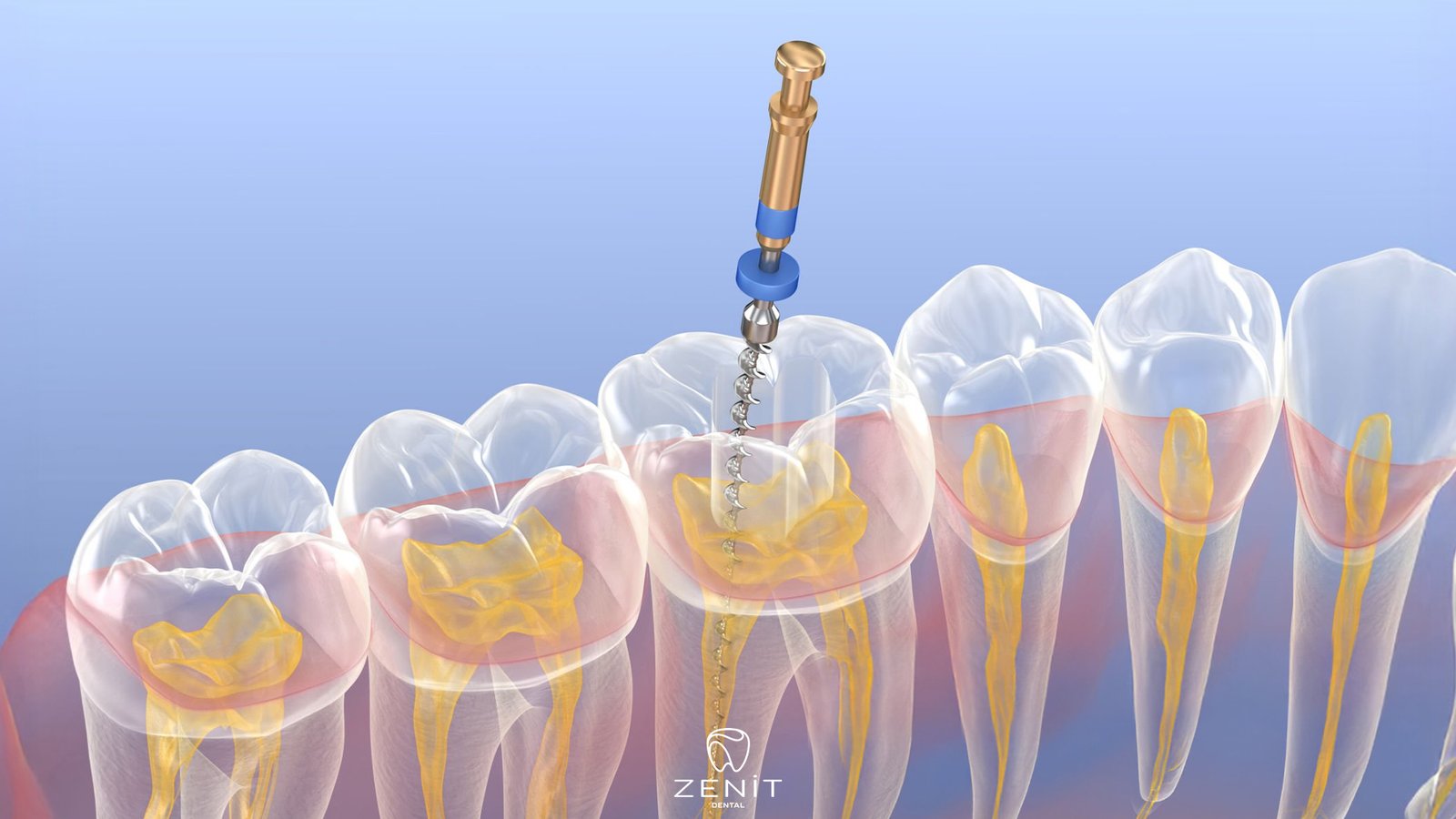
What is Root Canal Treatment?
Dental health is a vital part of our overall health. Having healthy teeth makes our daily lives easier and greatly improves our overall quality of life. Our teeth are a fundamental part of our smile and facial expression, and healthy teeth are important both aesthetically and functionally.
Root canal treatment is a critical dental procedure to protect dental health and save decayed or damaged teeth. This treatment cleans the damaged or infected tissues, usually located inside the tooth, which can cause infection, preserving the tooth’s natural structure and restoring its functionality. Root canal treatment is an important step in ensuring the longevity of teeth and is often recommended by dentists to maintain tooth health.
How is Root Canal Treatment Performed?
Root canal treatment is an important treatment method to protect dental health and save decayed or damaged teeth. Damage to the pulp tissue inside a tooth can often occur as a result of deep cavities or trauma. In this case, the tooth is likely to become infected, which can lead to pain, sensitivity, and even infection. Root canal treatment involves cleaning, sterilizing, and then filling this damaged tissue.
The steps of root canal treatment are as follows:
Examination and Diagnosis: First, your dentist will assess the condition of the tooth and determine the depth of the damage by taking necessary X-rays. This step is important to determine which stages of treatment will be performed.
Anesthesia and Access: Before starting treatment, regional anesthesia will be applied around your tooth. Then, an access hole will be made by the dentist to reach inside the tooth. This hole provides access to the area where the treatment will be performed.
Pulp Cleaning: Damaged pulp tissues and infected tissues are carefully cleaned with special endodontic instruments. This step is critical to eliminate harmful bacteria and infection inside the tooth. At the same time, the inside of the tooth is sterilized.
Root Canal Shaping and Filling: After cleaning, the canal is filled and shaped with specially designed biocompatible materials. This step supports the internal structure of the tooth and ensures future It is important to reduce the risk of re-infection.
Restoration: After root canal treatment, the tooth is usually restored with a filling or dental veneer. This allows the tooth to regain its normal function and aesthetics. The restoration process is done to restore the strength of the tooth and protect it from external influences.
Root canal treatment is an effective method to protect the health of teeth and ensure their longevity. Although the treatment process may sometimes require more than one session, it is an important step in protecting your tooth when done correctly. Regular dental check-ups after treatment and adherence to the care guidelines recommended by your dentist are important for ensuring the long-term success of the treatment.
Does Root Canal Treatment Hurt?
This treatment can be a nightmare for many people, but thanks to modern dental techniques and anesthesia methods, it is far from being a painful experience. First of all, it should be noted that root canal treatment is generally a procedure performed to clean and protect the damaged or infected tissues inside the tooth. This process is a procedure carefully performed by your dentist, and most patients experience minimal discomfort during treatment.
Whether root canal treatment is painful or not depends on the anesthesia used during treatment and patient communication. In most cases, dentists numb the treatment area by applying local anesthesia. In this way, patients do not feel any pain during treatment. A slight discomfort may be felt after the effect of the anesthesia wears off, but this usually decreases quickly and can be managed with painkillers.
Pain After Root Canal Treatment
A slight discomfort or pain after treatment is normal. This condition may be due to temporary sensitivity in the tissues surrounding the treated tooth during treatment. After treatment, your dentist will usually apply a mild painkiller to the treatment area and may prescribe pain medication for home use.
Pain usually subsides within the first few days and is mild to moderate in most patients. Drinking hot or cold beverages, or applying pressure to the tooth, can temporarily increase the pain. Therefore, it is important to be careful around the tooth and eat soft foods in the first few days after treatment.
If the pain is severe or increases over time after treatment, it is important to inform your dentist. Although rare, in some cases, infection or other complications may occur after treatment. Your dentist will assess the situation and provide the necessary treatment to help you feel better.