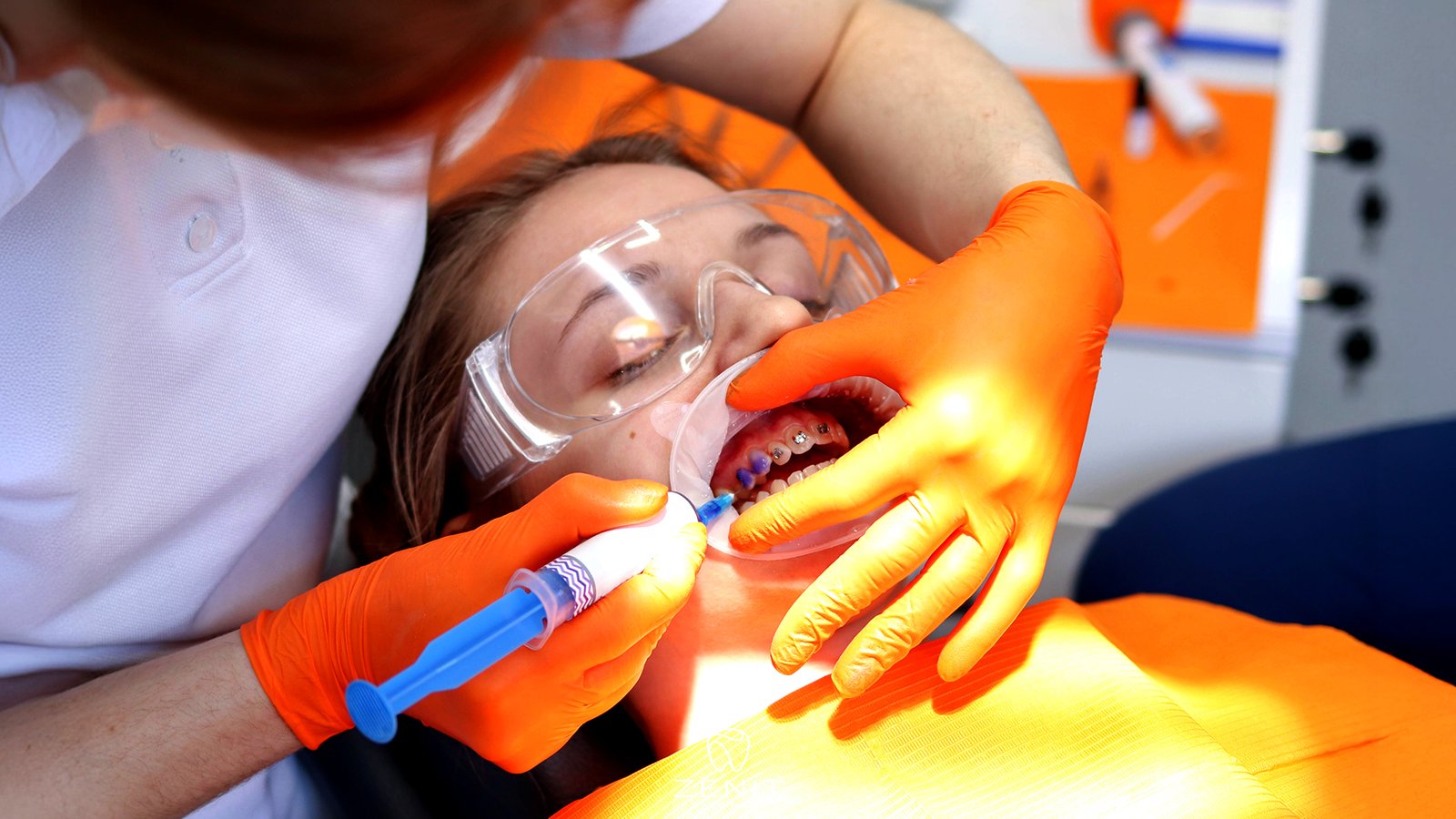
The health of the mouth and teeth, which are not only a means of nourishment but also of communication, is the first rule of dentistry. Genetic factors, lifestyle, and eating habits play a very important role in oral health. The mouth and teeth, which are needed throughout life, should always be healthy. At this stage, the field of functional dentistry comes to the rescue. Because this field aims to protect oral health, to get to the root of existing problems, and to eliminate problems before they even occur.
Having a healthy mouth is everyone’s right. Therefore, this area is extremely important. In societies where oral care and health have become a culture, this aspect of dentistry, which is frequently consulted, is becoming increasingly important. Functional dentistry includes many areas such as irregularly erupted teeth, gum diseases, decayed teeth, bad breath, and jaw development. A specialized dentist examines all problems in depth and can prevent possible consequences well in advance.
This specialized branch of dentistry is evaluated in two different ways. It is possible to receive functional dentistry services at any age. Because the mouth is a living organism and is constantly subject to changes. In addition, there are functional applications that start in childhood. In these applications, jaw development can be shaped depending on the child’s age. In this way, potential problems can be prevented well in advance. The dentist performs these procedures using technological devices and prostheses.
The first rule in dentistry is to preserve life. And for a person, the most important thing is their own teeth. Because no prosthesis or implant can replace a real, healthy tooth. This is also the primary goal of a dentist whose area of expertise is functionality. Their duties range from nutrition to monitoring and adjusting tooth structure. Their primary task is always to eliminate problems before they arise.
In this field of dentistry, the goal is to provide definitive treatment. The process can be lengthy to prevent problems before they even occur. Functional dentistry processes, which begin in childhood, can continue until a solution is reached. In applications at older ages, oral and dental health is first assessed. Detection and treatment of cavities and the completion of missing teeth are part of the process. In addition, a general analysis of the jaw structure is performed to identify potential problems.
For this, the possibilities offered by technology are used. Imaging and modeling technologies are used in our patients. Then, the results are evaluated with the expertise of our dentists. Treatment and care processes are determined. At this stage, the nutritional lists and dental care techniques given by the dentists must be followed completely.
The mouth and teeth are structures needed throughout life. Therefore, they should always be cared for, and necessary treatments should be done on time. However, maintaining oral health is only possible with this field of medicine. Technology has brought about new generation practices in dentistry. Oral care and health are part of personal hygiene. However, regular dental check-ups and interventions are always necessary for a healthy life.
Therefore, there is no age limit for receiving functional services from a dentist. In fact, the earlier you start, the better. Because unconscious oral care brings problems at an early age. Therefore, dentistry is necessary at every stage of life to avoid any problems related to the mouth and teeth.
Parents, in particular, should closely monitor their children’s oral and dental structure. They should be sensitive to abnormalities in the teeth and jaw structure due to genetic factors. Jaw abnormalities also affect the tooth structure, leading to problems in later years. Irregularly erupting and unhealthy teeth are more difficult to treat in later life.
Functional dentistry and orthodontic treatment are possible. Treatment is carried out as part of growth using technology, devices, and appliances. This is how the best results are achieved in most patients. However, this process is long and arduous. Patience is the most important rule. During this stage, all advice given by the doctor, from nutrition to the use of the prostheses, must be followed completely.
The need for a dentist, starting from childhood, continues throughout life. Regardless of the age at which it begins, the success of this field is evident. Because the expertise of the branch prevents new problems from arising after the previous ones have been resolved. A dentist can provide nutritional and medication advice to prevent these problems. Achieving healthy teeth is only possible with flawless care and check-ups. A dentist who knows the structure and history of your teeth is the key to having healthy mouths and teeth for a lifetime. In short, a person needs this dentistry throughout their life.
Everyone’s first duty is to protect their oral health. Smoking, consumption of coffee and tea, and neglecting oral care after eating acidic foods lead to significant problems. Furthermore, the calcium needed to form teeth continues throughout life. Therefore, oral care cannot be considered solely as individual protection. The involvement of dentists in this process is a crucial necessity. No matter how much care is taken, teeth are damaged by many factors.
At this stage, functional dentistry practices should be relied upon. Because this specialized field is one of the important aspects of oral health. Eliminating problems in the mouth before they even arise has become possible thanks to advanced technology and expert dentists. At this stage, the expert dentist can eliminate problems and treat potential future issues. However, the most important responsibility still falls on the individual. Attention should be paid to the dietary recommendations given by the dentist. At the same time, care and cleaning should not be neglected, and the methods shown by the dentist should be followed.